
Watch videos from the recent event held by Cochrane PaPaS
For 23 years the Cochrane Pain, Palliative and Supportive Care (PaPaS) group has been delivering the gold standard in evidence synthesis in the field of pain management, palliative and supportive care and supporting the community towards better methods and standards in pain clinical trials and systematic reviews. As their funding comes to an end, they highlighted and celebrated their contribution with an event, called ‘Truth, Integrity and the Future of Pain Evidence’ at the Wellcome Collection in London, UK. It was a chance to reflect on what has been discovered, where we continue to face important challenges, and how we might move toward a future of trusted evidence to guide better pain care globally.
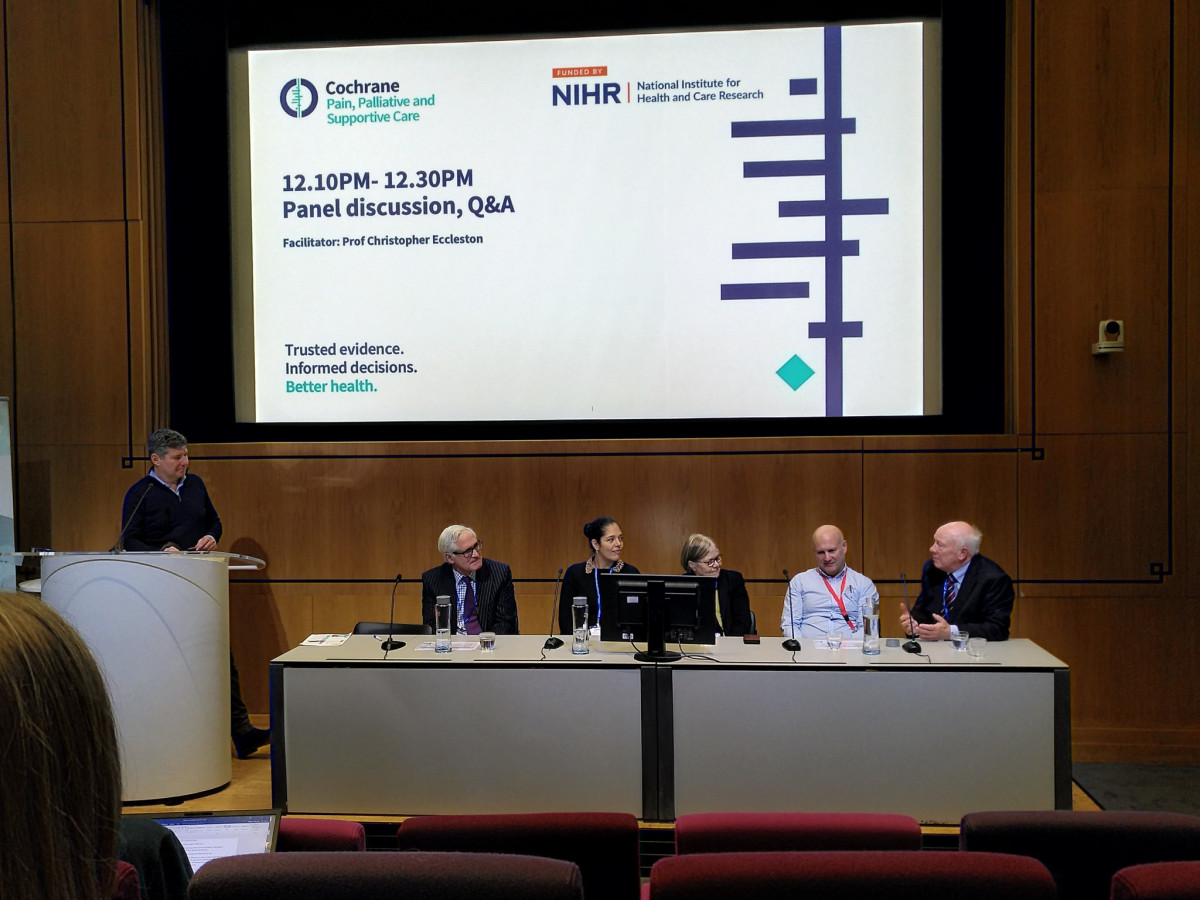
Dr. Neil O’Connell, Cochrane PaPaS Editor explains the importance of the event; “Working in evidence synthesis we can achieve a “birds-eye” view of the evidence ecosystem in our field, including its problems. Pain in clinical practice and patient care is often poorly served by an evidence architecture containing multiple structural weaknesses. These issues span pre-clinical research, clinical trials, and systematic reviews, and impact upon developing clinical guidelines. Clinical practice in pain management frequently diverges from the evidence, or evolves in the absence of evidence, driven by individual and organisational vested interests, market forces, fashion, and demand from people with pain. In our event, we heard from a range of established and emerging leaders in the field to better understand the challenges and to consider how we create better solutions.”
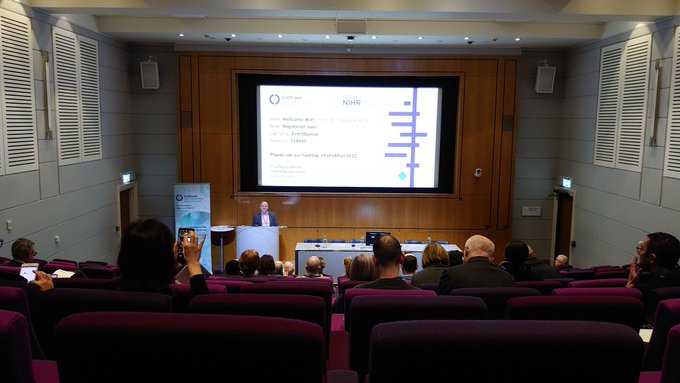
Talks at the meeting highlighted a range of challenges to the quality and trustworthiness of pain evidence across the pipeline, from pre-clinical through to evidence synthesis, and focused on approaches to improving that picture through better methods, open science practices, interdisciplinary working and partnership with people with lived experience of pain. There was an exceptional range of speakers and leaders in terms of discipline, perspective, and career stage. The audience was also diverse, representing clinicians across many disciplines, researchers, people with pain, editors, and publishers. It was a great day, with comments from one attendee saying it was their most thought-provoking event of the year.
- Read about the events of the day on Twitter under #PaPaSPain2022
- Watch videos from the event


