
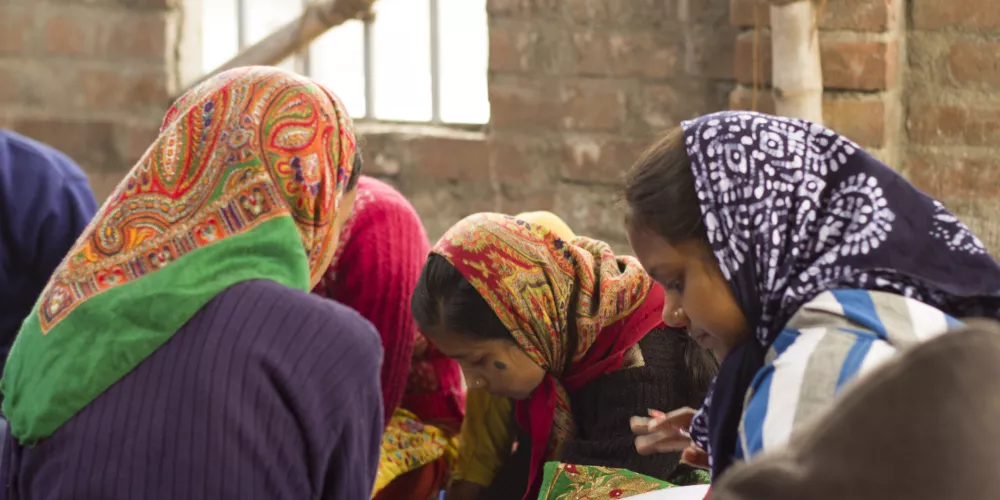
October 11th marks International Day of the Girl Child, a day that calls for policies that protect girls’ rights and enable their leadership.
Pakistan recently introduced the human papilloma virus (HPV) vaccine for girls, aiming for a 90% vaccination rate. Dr Muhammad Tayyab Qureshi, from Cochrane Pakistan, reflects on the vaccine campaign so far, and the value of investing in girl’s futures.
The background
Every year, thousands of women around the world die from cervical cancer – a disease that is both preventable and treatable when caught early. One of the most effective tools we have to prevent it is the HPV vaccine. Yet, access to this life-saving vaccine remains uneven, especially in low- and middle-income countries like Pakistan.
In September 2025, Pakistan launched a large-scale campaign to vaccinate school-aged girls against HPV. The vaccine was provided completely free of cost, removing a major barrier for millions of families. The campaign aimed to reach over 13 million girls across Punjab, Sindh, Islamabad, and Azad Jammu and Kashmir, with later phases planned for other regions. It was an ambitious effort. Not just because of the scale, but because of the many barriers that typically stand in the way of vaccination in our region: misinformation, social media propaganda, economic hardship, and lack of awareness.
Despite all this, something remarkable happened.
A whole-of-society approach
The campaign was led by the government with strong support from health departments, schools, local communities, and international partners like Gavi and the World Health Organization (WHO). But perhaps what made this campaign truly different was its approach: everyone was brought on board.
Religious scholars, teachers, health workers, parliamentarians, journalists, and parents were all engaged to support the message. The slogan “Sayhat Mand beti Sayhat Mand Gharna” (“Healthy daughter, healthy family”) helped communicate a simple but powerful idea: by protecting girls, we are investing in the health and future of the entire nation.
Dr. Nikhat Shakeel Khan, Member of the National Assembly and Convenor of the Parliamentary Caucus on Child Rights (PCCR), made a heartfelt appeal to the nation:
“I call upon all segments of society to ensure maximum participation in this campaign. By protecting our girls today, we are securing a healthier, stronger, and brighter Pakistan tomorrow.”
This cross-sector collaboration was not just symbolic, it was central to the campaign’s success.
Faith and public health: Islamic Scholars lead by example
In a country where religion plays a central role in everyday life, the support of respected Islamic scholars made a significant impact in building public trust and breaking vaccine-related myths.
Scholars such as Maulana Naeem ur Rehman Chishti, a leading religious figure at Jamia Masjid Hanafia Siddiquia in Rawalpindi, and Maulana Altaf Saifi, a former member of the Council of Islamic Ideology, came forward to support the campaign publicly and decisively.
They addressed community concerns directly, emphasizing that:
- the HPV vaccine is not against Islamic teachings
- protecting life and preventing harm are deeply rooted Islamic values
By sharing these messages through mosques, community gatherings, and media, they helped dismantle the harmful myth that the HPV vaccine causes infertility. A narrative that had discouraged some families from participating in the vaccination campaign.
Their influence helped shift public perception from fear to understanding. As a result, many hesitant families – particularly in more conservative or rural areas – felt confident that getting their daughters vaccinated was not only medically safe but religiously sound.
Real people, real stories
One of the most moving parts of this campaign has been the involvement of people directly affected by cervical cancer. Women like Saira, a survivor of the disease, have become social mobilizers, going door-to-door and school-to-school to educate others about the importance of HPV vaccination. Trained by the WHO, she shares her story to help others avoid what she went through.
Social media, which is often a space where misinformation spreads quickly, also became a tool for advocacy. Many young girls shared photos and videos of getting vaccinated. Teachers and parents joined in. For once, the louder voice was the one supporting science, not fighting it.
The Federal Health Minister, Syed Mustufa Kamal, publicly vaccinated his own daughter, sending a strong message that the vaccine is safe and necessary. Breaking the myth of conspiracy theories prevailing, making an example for others.
Overcoming hesitancy with awareness
At the start, around 300,000 families had refused the vaccine. But after strong communication efforts including community counselling, social media outreach, and powerful messages from trusted figures that number dropped to 90,000.
The vaccine being offered free of cost also played a key role in improving acceptance, especially in low-income communities.
By the end of the campaign’s first phase, according to the health minister of Punjab Khawaja Imran Nazir over 72% coverage was achieved. While the original goal was 90%, the progress so far offers hope. The next phases will cover Khyber Pakhtunkhwa in 2026, followed by Balochistan and Gilgit-Baltistan in 2027.
Why it matters and what’s next
Cervical cancer is the fourth most common cancer among women worldwide, and it hits hardest in places with limited access to screening and treatment. The HPV vaccine is safe, effective, and essential for reducing the risk of cervical cancer.
In Pakistan, the urgency is clear. As Dr. Azra Fazal Pechuho, Sindh’s Minister for Health and Population Welfare, stated:
“This vaccine is vital in protecting our girls from a deadly disease that affects more than 5000 women in Pakistan every year, claiming around 3000 lives.”
These are not just numbers, they are young lives lost and futures stolen by a disease we know how to prevent.
Pakistan’s approach of working across sectors, engaging communities, and using personal stories to counter fear can serve as a model for other countries facing similar challenges. It shows that with local engagement, and clear communication, the barriers can be overcome.
A step toward equity
On this International Day of the Girl, we are reminded that health is a basic right, not a privilege. Every girl, no matter where she lives, deserves protection from preventable diseases. Pakistan’s campaign is a step in the right direction, showing that change is possible.
By investing in the health of girls today, we are investing in a stronger, healthier future for everyone.
References
GAVI, Turning point for women’s health in Pakistan


