
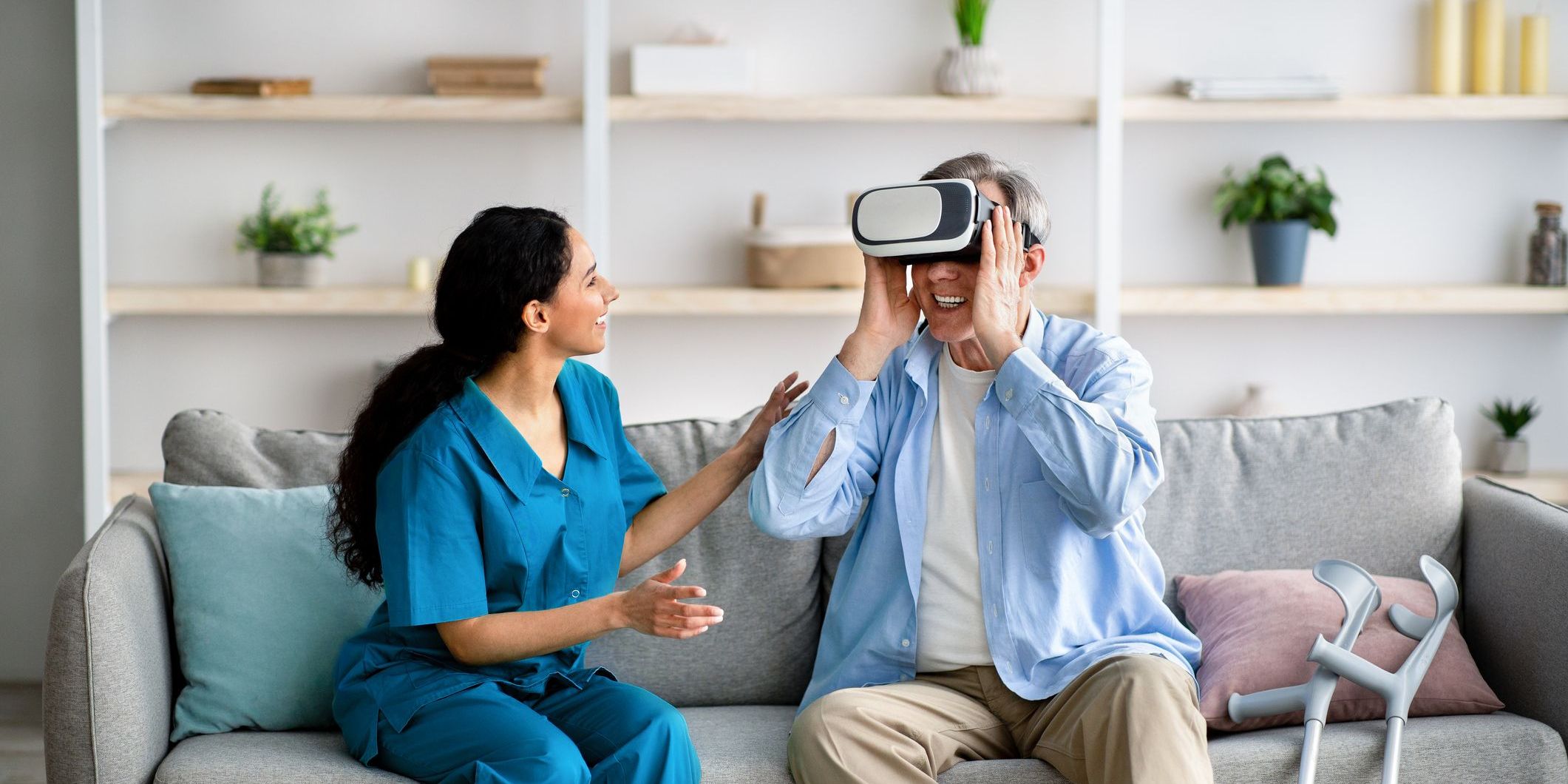
A Cochrane review has found that virtual reality (VR), when used in addition to standard therapy, can help stroke survivors regain arm movement. The findings suggests that VR could be a promising tool to boost rehabilitation efforts, particularly by increasing the amount of therapy patients receive.
Published today, this is the fourth update of a Cochrane review first released in 2011, and now includes data from 190 trials involving 7,188 participants – with 119 new studies added since the previous version in 2017. The review assessed a wide range of VR technologies, from simple screen-based gaming to immersive, head-mounted devices specifically developed for rehabilitation settings.
A team of Cochrane authors based in Australia, Canada, and the United States found that VR, when compared to conventional therapy, may slightly improve arm function and activity. More promising effects were seen when VR was added to usual care, increasing total therapy time and leading to greater gains in arm function.
"Spending more time in therapy is known to improve outcomes after stroke," said Professor Kate Laver, lead author from Flinders University. "Virtual reality can offer a fairly inexpensive and engaging way to increase the amount of therapy without a clinician’s supervision."
The review also found VR may be beneficial for improving balance and reducing activity limitations, though effects on mobility, participation, and quality of life remain uncertain due to limited or low-certainty evidence.
Despite the growing number of studies, many trials were small and used basic or low-cost VR technologies, such as off-the-shelf gaming systems. Few studies evaluated immersive, head-mounted systems, and their effectiveness is still unclear. The review also noted that most current VR programmes focus on movement training, rather than helping people regain functional abilities like dressing or cooking.
“This technology has the potential to simulate real-life environments, such as shopping in a supermarket or crossing a street, which allows clinicians to trial tasks that are unsafe to practise in the real world,” said Professor Laver. “Yet we’re still seeing simple VR interventions dominate the research. There’s a real opportunity for researchers to go further and develop more sophisticated, function-focused therapies.”
While adverse events were monitored in many of the included studies, they were rare and mild, suggesting that VR is generally safe and well tolerated.
The review highlights the need for more well-designed, larger studies, particularly those evaluating immersive and task-specific VR technologies, to understand how best to use this tool in stroke recovery.


