

World Continence Week 2019 is held between 17 and 23 June and is a global initiative run by the World Federation of Incontinence Patients (WFIP), with the approval of the International Continence Society (ICS). The vision is to help improve health, wellness and quality of life for those with continence issues, and to further establish awareness of bladder weakness, pelvic pain and other conditions that impact on the lives of patients and carers.
Cochrane Incontinence works with authors to prepare, maintain and disseminate systematic reviews of the effectiveness of interventions for incontinence, including prevention, treatment and rehabilitation. The scope of these reviews touches on a wide variety of continence issues, including urinary and faecal incontinence, pelvic organ prolapse, the use of urinary catheters, post-operative urinary retention and night-time and daytime wetting in children.

Below are a variety of Cochrane resources related to World Continence Week.
Highlighted Cochrane Reviews

Q&A with the authors: Pelvic floor muscle training versus no treatment, or inactive control treatments, for urinary incontinence in women
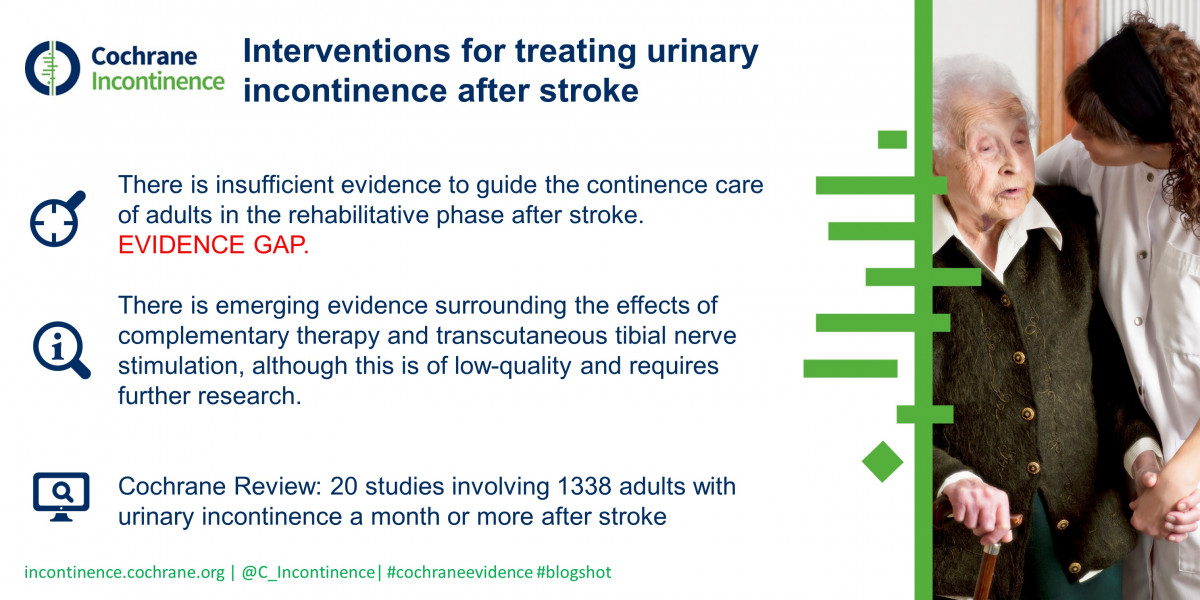
2. Interventions for treating urinary incontinence after stroke in adults
3. Yoga for treating urinary incontinence in women

4. Alpha blockers for treating functional daytime urinary incontinence in children (protocol): full review expected in 2020.
5. Interventions for treating people with symptoms of bladder pain syndrome: a network meta-analysis (protocol): full review expected in 2019.
Take a look at these Evidently Cochrane blog posts featuring Cochrane Incontinence evidence:
- Cochrane evidence on catheter washouts: from Twitter to the bedside. The founder of WeNurses reflects on how Cochrane evidence surrounding catheter washouts helped her challenge and change a patient’s care.
- Quiz time on Evidently Cochrane! Artefacts and other evidence. This final post of 2018 cites Cochrane Incontinence’s review ‘Pessaries (mechanical devices) for pelvic organ prolapse in women’.
Find all of Cochrane Incontinence’s reviews on the Cochrane Library.
Sign-up for the Cochrane Incontinence newsletter.
Read this post in Russian.


