
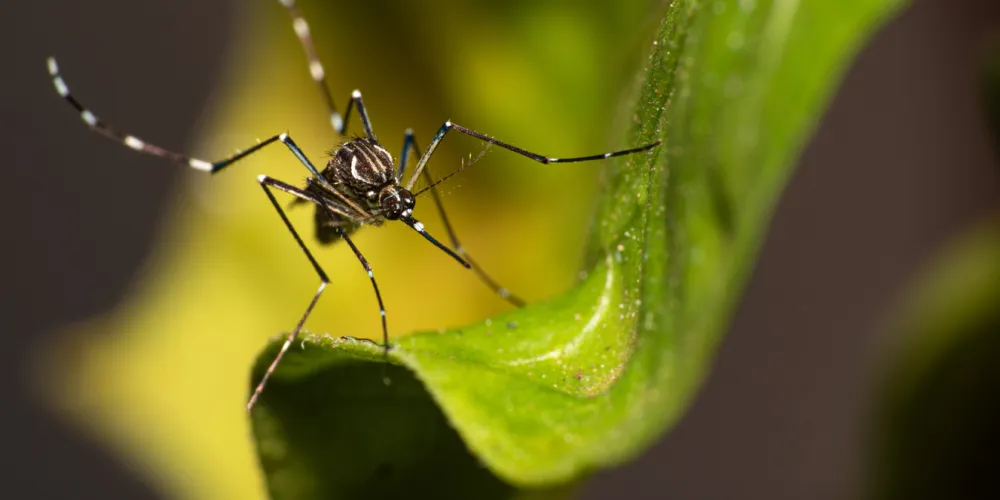
A new Cochrane evidence and gap map (EGM) has mapped the global research landscape on dengue prevention, finding plenty of research but not enough of it synthesized in ways policymakers can use.
Dengue is one of the most rapidly spreading infectious diseases in the world. Spread through the bites of the infected Aedes aegypti mosquito, the global threat posed by dengue has been rising for years, as climate change, urbanization and international travel aid the spread of the mosquitoes that transmit it. Brazil reports some of the highest dengue case numbers globally, with the disease disproportionately impacting communities affected by adverse social, economic, and environmental conditions.
Published in the Cochrane Database of Systematic Reviews, this is the first comprehensive evidence and gap map consolidating primary studies and systematic reviews on dengue prevention strategies. It finds that while hundreds of studies exist, only a small fraction have been synthesized into reliable, high-quality systematic reviews that policymakers and funders can act on.
"There's a lot of evidence out there, covering community education, vector control, vaccines, and environmental interventions," says Dr Bruno Guedes, co-first author from Federal University of Piauí, Brazil. "However, our gap map revealed some important gaps in the evidence regarding systematic reviews, especially for adult vector and aquatic-stage interventions, as well as for implementation and behavioural outcomes.”
Where the gaps are
Community education is one of the best-documented areas, drawing on 47 randomized trials and 140 non-randomized studies. It includes engaging with communities to stop mosquitoes from breeding and prevent the spread of the virus, focusing on practical steps like clearing standing water, involving local schools, and working with community leaders to build long-term safety habits. Even so, there is a lack of evidence whether these types of interventions make an impact to the spread of the disease itself. This is a common theme among interventions that target mosquitoes.
Beyond community education, the map identified other important gaps. For adult mosquito control, existing reviews are generally outdated, with the exception of one recent review focused on the Wolbachia approaches. Interventions targeting the aquatic, or larval, stage of the mosquito show synthesis gaps spanning all outcome areas. For vaccines, evidence on implementation is limited, and behavioural outcome evidence is essentially absent. And for environmental interventions, primary studies exist, but behavioural and implementation outcomes still lack quality systematic reviews.
“We were most surprised by the lack of synthesized evidence on dengue vaccines in the adult population,” explains Leslie Choi, co-first author and Evidence Synthesis Development Editor at Cochrane. “Dengue vaccines have been studied in many clinical trials, especially regarding safety and disease prevention. However, we still need more evidence on how vaccination programs work in real-life public health settings. This is an area in which Cochrane is looking to commission reviews.”
Which gaps are the highest priority
The EGM was designed to equip policymakers with gap maps tailored to their local health priorities, helping them identify critical knowledge gaps to inform future primary research and systematic reviews at the local level.
Policymakers and civil society representatives were directly involved in the process, and stakeholders prioritized research on adverse effects across four areas. In no particular order, these are:
- Environmental interventions
- Community education
- Interventions targeting aquatic stages of the vector
- Interventions targeting adult vectors
What this means
The author team call for updated, comprehensive systematic reviews on vector control interventions, stronger synthesis of implementation and behavioural evidence across non-vaccine strategies, and more systematic evaluation of adverse effects beyond vaccines.
"The main issue isn't that we lack dengue prevention research; it's that the research hasn't been synthesized in ways that are useful for decision-making," says Dr Guedes. “Busy policymakers and public health officials need clear answers to basic dengue questions. Currently, those questions are left unanswered.”
The authors also caution that an overreliance on entomological outcomes, such as mosquito counts, is insufficient on its own. Greater emphasis on epidemiological and real-world implementation outcomes, they argue, is essential for designing dengue control strategies that are effective, scalable, and appropriate to local contexts.
About the evidence and gap map
The map was produced using Cochrane Crowd, Cochrane's citizen-science platform, together with EPPI Reviewer and EPPI Mapper software to code and visualize the evidence. Stakeholder engagement was conducted in partnership with Instituto Veredas, a Brazilian NGO working at the intersection of public management, academia, and civil society. The interactive online map allows funders, policymakers, and researchers to explore the evidence base by intervention type and outcome, and to identify where future research investment is most needed.
See the full gap mapRead the review Read the news item in Portuguese


