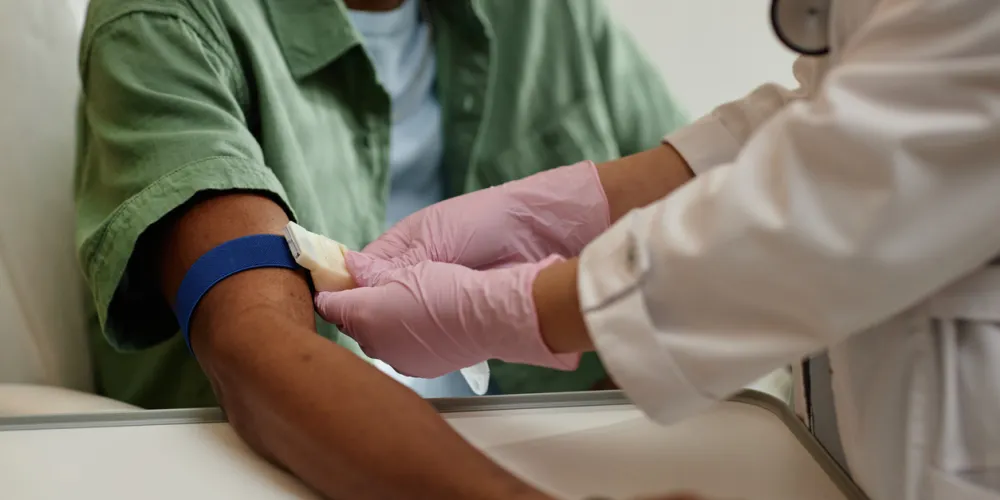
Blood tests to detect potential signs of prostate cancer likely reduce the risk of dying from prostate cancer, an updated Cochrane review finds. This is a shift from the previous version of the review, which did not find sufficient evidence that screening reduced prostate cancer deaths.
Prostate cancer is one of the most common cancers in men. Early detection through screening has long been debated, with experts divided on whether the benefits outweigh the risks of overdiagnosis and overtreatment.
A modest but meaningful benefit
The review team analyzed data from six trials involving almost 800,000 participants across Europe and North America. They found that screening with a PSA (prostate-specific antigen) blood test reduces prostate cancer deaths by approximately 2 for every 1,000 men screened. Put another way, 500 men would need to be invited to a screening to prevent one prostate cancer death. This mortality data comes from a major trial that followed 162,241 men for 23 years.
“With new data now available, we can now say with moderate certainty that PSA screening reduces prostate cancer deaths in men with a sufficient life expectancy.
"This suggests that for the right patient – someone who is well-informed, has a good life expectancy, and understands the full implications of screening – there is now a reasonable evidence base to support a conversation about PSA screening. This represents an important change in the evidence for future guideline developers and policy makers to consider.”
– Dr Philipp Dahm, Professor of Urology, University of Minnesota, and senior author of the review.
The studies included in the review did not systematically assess impacts on quality of life, such as complications from biopsies, sexual dysfunction, and urinary problems. The authors highlight that other studies outside of this review, such as the ProtecT trial, address treatment-related harms and should be taken into account by decision-makers.
However, the risk of overdiagnosis still remains a key issue. Screening detected around 30% more prostate cancers overall, mostly at an earlier stage. The review found that roughly 36 additional cancers were diagnosed per thousand men screened, for every 1–2 deaths prevented. The authors caution that these tests can detect low-grade cancers that may never have caused symptoms or harm during a man's lifetime, meaning identifying them can cause anxiety and unnecessarily aggressive treatment.
"We want to be clear that this is not a blanket endorsement of universal screening. The decision should always be made between a patient and their doctor, with a full understanding of both the potential benefits and the very real risks of overdiagnosis and unnecessary treatment."
– Juan Franco, Evidence Synthesis Unit Lead, Heinrich Heine University Düsseldorf, and first author of the Cochrane review
Better data, stronger evidence
The previous version of this review found that prostate cancer screening did not significantly reduce prostate cancer deaths, based on a meta-analysis of five randomized controlled trials. That uncertainty had been a major factor in decisions not to introduce national screening programmes in several countries.
The authors state that the modest benefits observed in this review aren’t due to a change in the underlying evidence but mostly because the trials have now followed participants for long enough to detect a mortality benefit that was previously too early to see.
Dr Franco emphasized that this update represents a better overview of the current evidence:
"The landscape has changed considerably since our 2013 review. Not only do we have stronger long-term evidence on mortality, but the tools available to reduce the harms of screening, such as MRI and active surveillance, have also advanced significantly.”
The review also examined a newer generation of screening approaches designed to be more precise and reduce unnecessary biopsies, which combines PSA testing with a kallikrein panel blood test and MRI scanning. MRI and active surveillance are approaches to detect indolent cancers that do not need aggressive treatments, thus reducing the harms of overtreatment. Early trial data suggest these methods may detect more cancers, but it is too soon to know whether they save more lives or cause fewer harms than PSA testing alone.
Find us on