
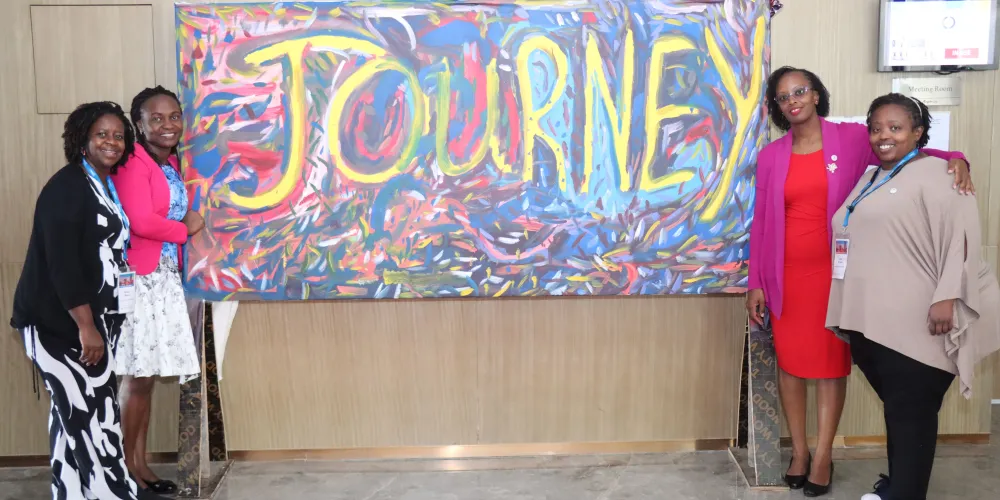
I am constantly reminded that no meaningful path is ever a straight line. There are bends, pauses, shadows, unexpected turns and sometimes stretches where the destination feels uncertain.
Scientific careers are often described as linear: study diligently, publish consistently, progress steadily upward. From the outside, it appears orderly. Predictable. But for many women, the path is anything but linear. My journey in science has included seasons of instability, pauses for motherhood, moments of doubt and periods of quiet rebuilding. Looking back, I do not see disruption. I see lessons.
Here are some of the lessons that reshaped how I understand success, equity and belonging in science.
Instability is not inadequacy
There was a season in my career when I found myself between jobs. No salary. No guarantee of what would come next. It would have been reasonable to step back and wait. But I could not bring myself to do nothing. So I kept showing up. I volunteered for projects. I supported ongoing studies. I attended meetings. I read more deeply. I strengthened my methodological skills. I built relationships. I said yes to opportunities that did not offer immediate financial reward but offered growth. It was a humbling season but it was also transformative. It built discipline. It built consistency. It built resilience. The skills I developed during that period became the very skills I later showcased in interviews: depth, systems thinking, methodological rigor. They were not abstract; they were hard earned. And they opened the door to my next role.
Many women in science experience similar instability which may include short-term contracts, funding gaps, delayed promotions or structural barriers. These periods can feel like setbacks but instability does not mean inadequacy.
Many women in science experience similar instability which may include short-term contracts, funding gaps, delayed promotions or structural barriers. These periods can feel like setbacks but instability does not mean inadequacy. Sometimes the seasons that feel invisible are quietly building capacity that will later become visible.
Productivity is seasonal
Another defining season came during motherhood. I had my children in quick succession during a time that coincided with the global pandemic. While I adored motherhood, I struggled with the feeling that science and the world were accelerating while I was paused. When I returned to work, I carried exhaustion and a quiet question: had I fallen behind permanently? Scientific systems often reward uninterrupted productivity continuous publishing, constant visibility, tight research windows, rigid age limits for grants. But real lives do not unfold in uninterrupted sequences.
For many women, careers include caregiving seasons, pauses, recalibrations and invisible labor that is rarely measured. What I eventually learned though not immediately is that productivity is seasonal. A slower period does not equal stagnation. Sometimes what feels like a pause is quietly building resilience, empathy and clarity. Those qualities may not appear in performance metrics, but they profoundly shape leadership. Equity in science is not about lowering standards. It is about ensuring that standards reflect real lives. When opportunity is tied strictly to uninterrupted timelines and calendar years, we risk losing talented women whose careers include pauses or nonlinear paths.
Run your race
One of the most powerful pieces of advice I received from a female mentor was simple: Run your race. Science can feel competitive. People publish at different speeds. Some rise quickly. Some appear far ahead. It is easy to measure yourself against someone else’s timeline and conclude that you are behind. This shifted my focus to becoming better than I was yesterday. It pushed me to strengthen my own craft and deepen my own understanding. Running your race does not mean moving slowly. It means moving intentionally. It means building depth. Depth means mastery of your field. With depth comes intellectual and methodological rigor. Ethical consistency. Long-term credibility and ultimately meaningful visibility.
As a woman in science particularly as a woman from a low- and middle-income country, I have come to understand that visibility is not symbolic, it is structural. When women from diverse backgrounds are visible in global scientific spaces, we influence research priorities, questions and perspectives.
As a woman in science particularly as a woman from a low- and middle-income country, I have come to understand that visibility is not symbolic, it is structural.
Staying in the room
My journey has not been linear. It has included moments of leadership, exhaustion, growth, uncertainty and deep purpose. I have learned that strength is often shaped in the seasons that feel most uncertain.
To women and girls entering science, I offer this: build depth. Claim your contributions. And remain in the spaces where decisions are made. When women stay in the room, science changes and when science changes, communities benefit.
For me, the Kenya Medical Research Institute (KEMRI) and Cochrane have been those spaces.
It was within KEMRI that I learned the craft of primary research, the ethics that anchor responsible science and the weight of generating evidence that affects real communities. KEMRI shaped my scientific backbone and introduced me to my first women mentors.
Within Cochrane, I found women who were ready not only to mentor, but to sponsor. Mentors advise you; they refine your thinking. Sponsors mention your name in rooms you are not in they create access. Both matter.
It was through these women that I fell deeply in love with evidence synthesis. They nurtured my growth, challenged my assumptions and expanded my confidence. I am who I am today because of the women who invested in me and I carry a deep responsibility to pay that forward. Cochrane’s commitment to advancing women’s leadership is reflected in initiatives such as the Anne Anderson Award, which recognizes those who enhance the visibility and advancement of women within the organization.
Science moves forward when we lift as we climb.


