
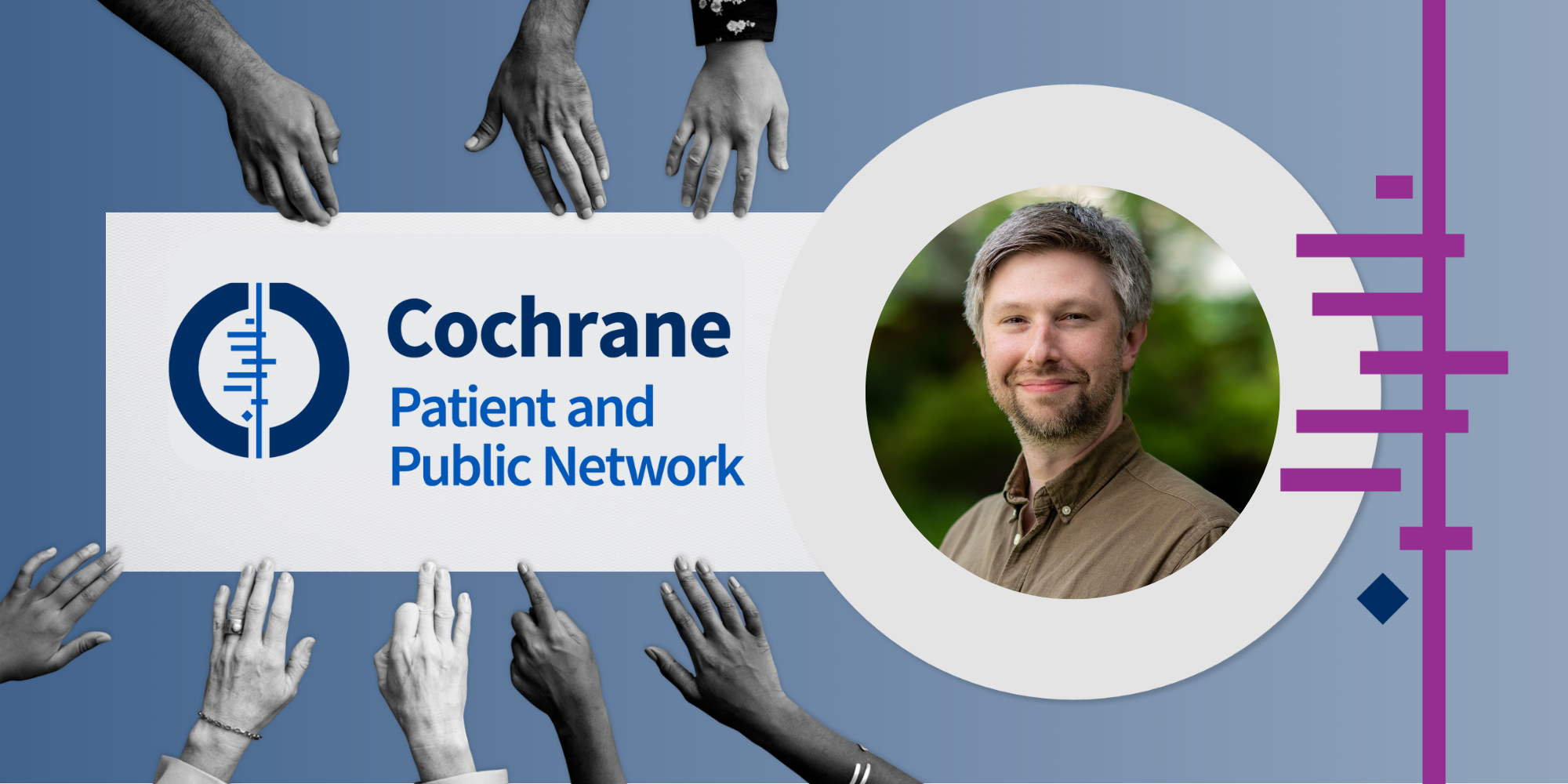
Jack Nunn has been involved with the Patient and Public Network Executive since 2020. Our Patient and Public Involvement Manager, April English, sat down with Jack to chat about his motivations for volunteering with Cochrane, some of his impacts, top tips, and so much more!
What motivated you to get involved in Cochrane's evidence community?
Like most people, research and evidence synthesis was something that experts did, and it wasn’t something I knew much about, or felt I needed to.
However, in 2007 in my early twenties I lost my girlfriend to Sudden Adult Death Syndrome (or Sudden Arrhythmia Death Syndrome). It completely shifted my perspective in many ways, and left me with an overpowering feeling that everyone should be able to get involved in research, and help shape the future of it. I’ve now spent over 15 years working to involve the public in research – and through that work came across the amazing work of Cochrane and the evidence synthesis community. The more I learned, the more fascinated I became.
It completely shifted my perspective in many ways, and left me with an overpowering feeling that everyone should be able to get involved in research, and help shape the future of it.
Since becoming involved with Cochrane, what is a particular moment or project you are proud of?
About 10 years ago I was asked to help create a learning resource to help explain what systematic reviews were. After a lot of thinking and co-design, we had a 3-minute video called ‘What are systematic reviews’, which you can still find on the pages of the Cochrane website. It has now had over 400,000 views and I’m proud to have had a part in helping so many people understand the concept of evidence synthesis.
Can you share a story where you or someone you know were involved in health research, and how that experience led to a significant impact on your own life or the lives of others?
A few years ago I was on an Australian Federal Government committee which was involved in assessing what ‘health technology’ should be funded. One item we looked at was ‘genetic testing of inherited cardiac arrhythmia disorders’, which is linked to Sudden Arrhythmia Death Syndrome. I knew all the hard work, research, evidence synthesis, campaigning and admin that it had taken to get it to this point of assessment.
As a patient and public member, I felt that it was my role to bring my personal experience into the assessment, to remind people of the importance of funding such testing. That meeting was one of the hardest, but also proudest moments of my life.
That ‘lived-experience’ perspective is so crucial to every stage of research – from identifying topics, to evidence synthesis to assessing health technology – everyone should be able to get involved in research, and helping get others involved is my life’s passion.
What resource, organization, learning opportunity, or mentor helped you most when starting your Cochrane journey?
When I first got involved with volunteering on the Cochrane Patient and Public Network Executive, it was Richard Morely (past Consumer Engagement Officer) and Maureen Smith (Chair) who took the time to help me understand so much, including all the ways that people can get involved in the work of Cochrane. I will always be grateful for that support.
What advice or tips would you give others interested in getting involved with Cochrane?
Get involved! That’s my advice! It’s a wonderful community and there are so many ways you can help!
Join Jack and 2500 other patients and members of the public who are contributing to Cochrane and health evidence by signing up to our Network here.


